Every term & tradition of a XV años, beautifully explained.
From chambelán to cambio de zapatilla to hora loca: bilingual definitions, pronunciation, and the cultural meaning behind every part of the day.
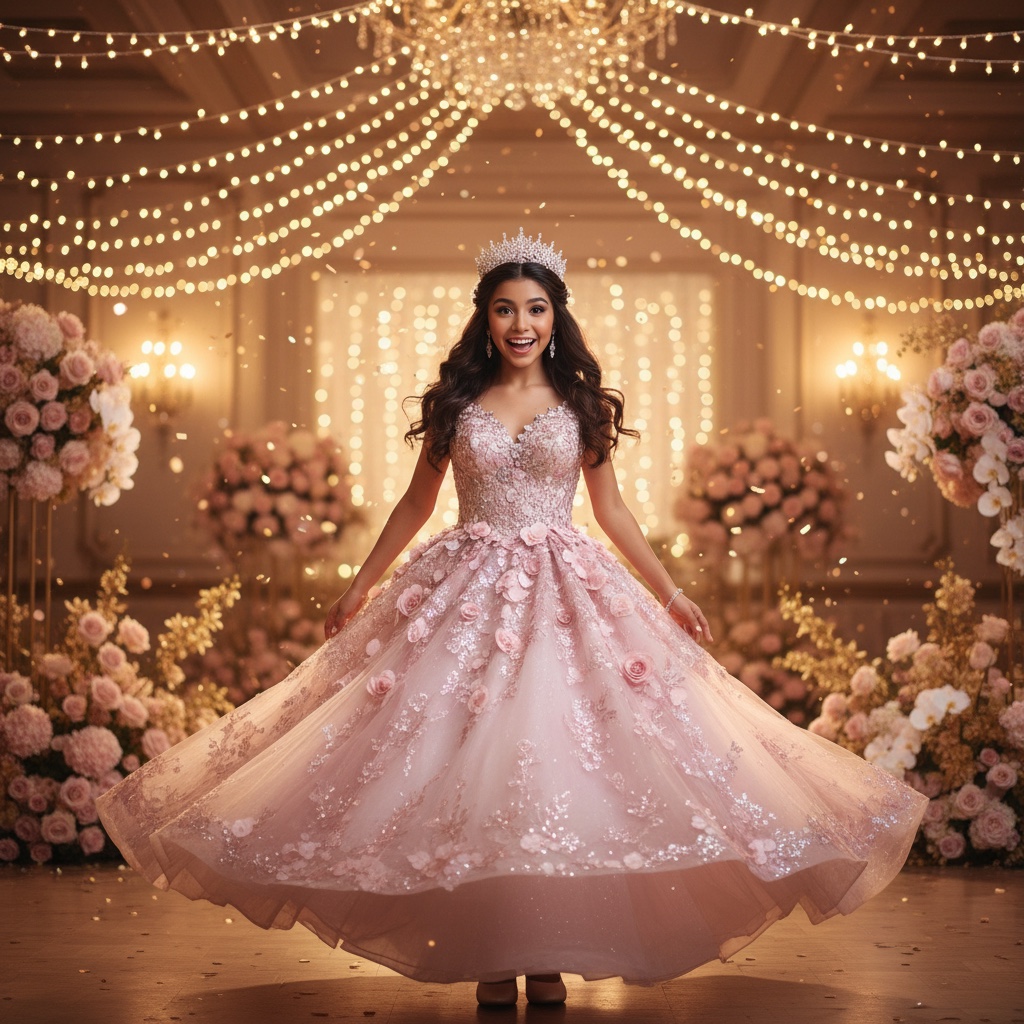
A quinceañera isn’t a birthday party. It’s a rite of passage with its own choreography, its own people, and its own beautiful vocabulary, passed down through generations of Latina families.
Whether you’re the quinceañera herself, the mamá making it happen, a padrino with a role to play, or a friend along for the ride, this is the glossary you’ll come back to. We work with quinceañera families every week and these are the words they ask us about most often.
The People
Las personas
The court, the family, and the sponsors who make a quinceañera what it is.
- QuinceañeraThe girl of honor/keen-seh-ah-NYEH-rah/
- Literally "fifteen-year-old (girl)." Refers both to the young woman celebrating her 15th birthday and to the celebration itself. The day marks her formal transition from childhood (niñez) into young womanhood (adolescencia).
- QuinceañeroA boy's 15th/keen-seh-ah-NYEH-roh/
- The male equivalent. Less common historically but increasingly celebrated, especially in Mexican-American and Cuban-American families. Many of the same traditions apply with adjustments.
- ChambelánMale escort / chamberlain/cham-beh-LAHN/
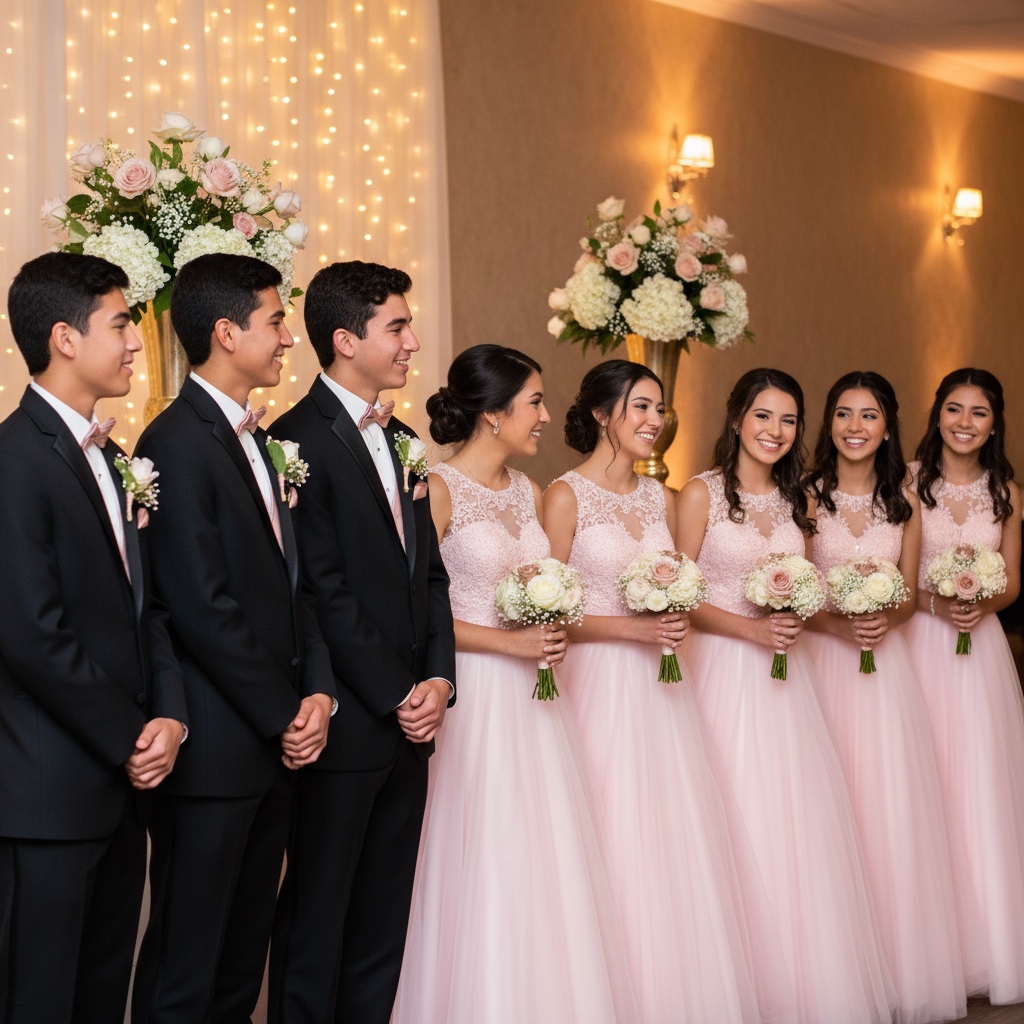
- The young men who form the court of honor and escort the quinceañera throughout the day. They learn the choreography for the vals and accompany her during the formal dances. The word comes from the same root as "chamberlain", historically a court attendant.
- Chambelán de honorEscort of honor/cham-beh-LAHN deh oh-NOHR/
- The quinceañera's primary escort, often a brother, cousin, or close friend. He leads the entrance, dances the first vals with her (after her father), and stands beside her during key ceremonial moments.
- DamaLady of the court/DAH-mah/
- The young women who form the female half of the court of honor. They wear matching dresses (chosen by the quinceañera), participate in the choreography, and serve as her closest companions during the celebration.
- Corte de honorCourt of honor/KOR-teh deh oh-NOHR/
- The full ensemble of damas and chambelanes who escort the quinceañera. The corte rehearses the choreography for weeks (sometimes months) before the event and is one of the most photographed moments of the entire celebration.
- Padrinos / MadrinasSponsors / godparents/pah-DREE-nohs / mah-DREE-nahs/
- Family members and close friends who sponsor specific elements of the celebration: the dress, the cake, the ring, the tiara, the bouquet, the religious items. Each padrino/madrina has a designated role and is recognized publicly during the celebration.
- Padrinos de honorGodparents of honor/pah-DREE-nohs deh oh-NOHR/
- The most senior sponsors, typically her actual godparents from baptism, or a couple chosen specifically for this role. They walk alongside the quinceañera at key moments and offer formal blessings.
- MariachiMariachi band/mah-ree-AH-chee/
- A traditional Mexican ensemble featuring guitars, violins, trumpets, and the iconic vihuela and guitarrón. Often plays during the entrance, las mañanitas (the birthday serenade), and signature songs throughout the night.
Buen saber: Plural: chambelanes. There are usually between 7 and 14, often matching the number of damas.
Buen saber: Plural: damas. Traditionally 14 damas representing the quinceañera's years so far, with the quinceañera herself completing the 15.
Buen saber: Common padrinazgos include: padrinos del vestido (dress), de la corona (tiara), del anillo (ring), del rosario (rosary), del pastel (cake), del recuerdo (favors), and many more.
The Religious Ceremony
La ceremonia
The mass, the blessings, and the symbolic objects that anchor the spiritual heart of the day.
- Misa de acción de graciasMass of thanksgiving/MEE-sah deh ahk-see-OHN deh GRAH-see-ahs/
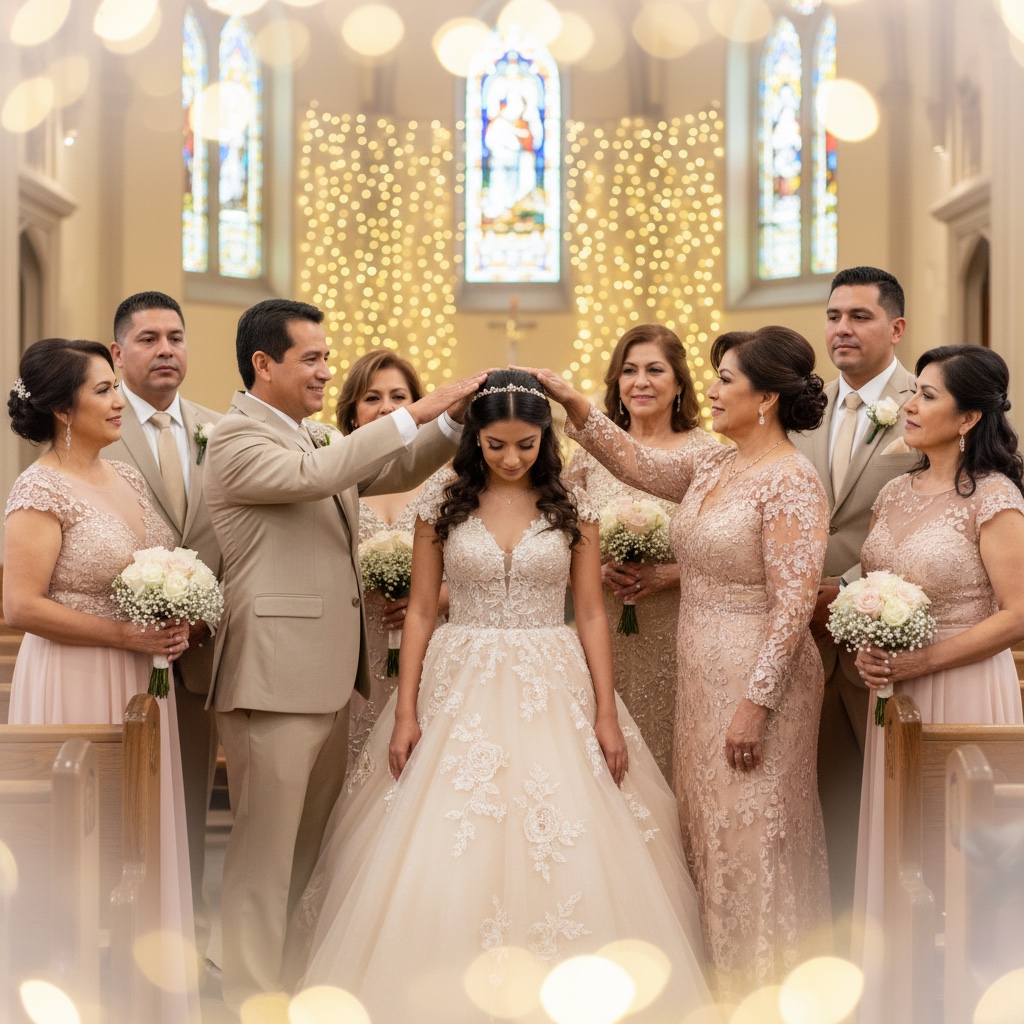
- The Catholic Mass that opens the day. The quinceañera, her family, padrinos, and court process into the church together. The priest offers a blessing for her transition into young womanhood and her commitment to her faith.
- BendiciónBlessing/ben-dee-see-OHN/
- Formal blessings offered by the priest, parents, padrinos, and grandparents. Often given individually after the Mass, and a deeply emotional moment for the whole family.
- Renovación de votos bautismalesRenewal of baptismal vows/reh-noh-vah-see-OHN deh VOH-tohs bow-tees-MAH-les/
- A key moment in the Mass where the quinceañera personally renews the vows her parents and godparents made at her baptism, affirming her own faith as a young adult.
- Biblia y rosarioBible and rosary/BEE-blee-ah ee roh-SAH-ree-oh/
- Presented to the quinceañera as gifts during the ceremony, usually by designated padrinos. Symbols of her commitment to faith and prayer in her new chapter.
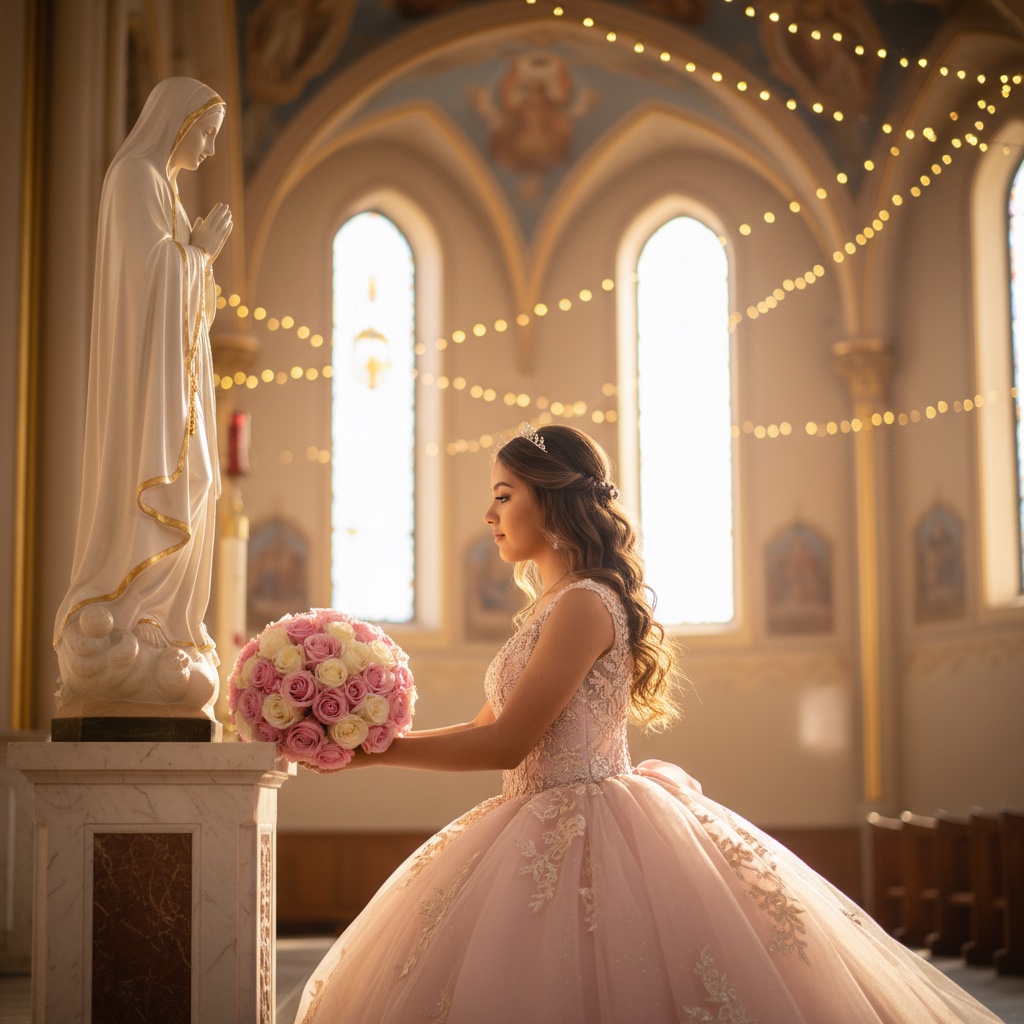
- Ramo a la VirgenBouquet to the Virgin/RAH-moh ah lah VEER-hen/
- The quinceañera presents a floral bouquet (often roses) to an image of the Virgin Mary (most commonly La Virgen de Guadalupe) as an act of devotion and gratitude.
- MedallaMedal / pendant/meh-DAH-yah/
- A religious medal, often of the Virgin Mary, a patron saint, or a small cross, placed on the quinceañera by a padrino during the Mass.
- CojínKneeling cushion/koh-HEEN/
- A decorative kneeling pillow used during the Mass and sometimes during the formal toast. Often matches the quinceañera's dress colors and becomes a keepsake afterward.
Buen saber: In many families this is one of the most photographed moments of the entire day.
The Signature Traditions
Las tradiciones
The moments everyone waits for, and the ones your guests will photograph the most.
- ValsThe waltz/BAHLS/
- The choreographed waltz performed by the quinceañera and her court. The traditional sequence: father-daughter dance first, then a dance with her chambelán de honor, then the full court joins in. Months of rehearsals lead up to this.
- Cambio de zapatillaChanging of the shoes/KAHM-bee-oh deh sah-pah-TEE-yah/
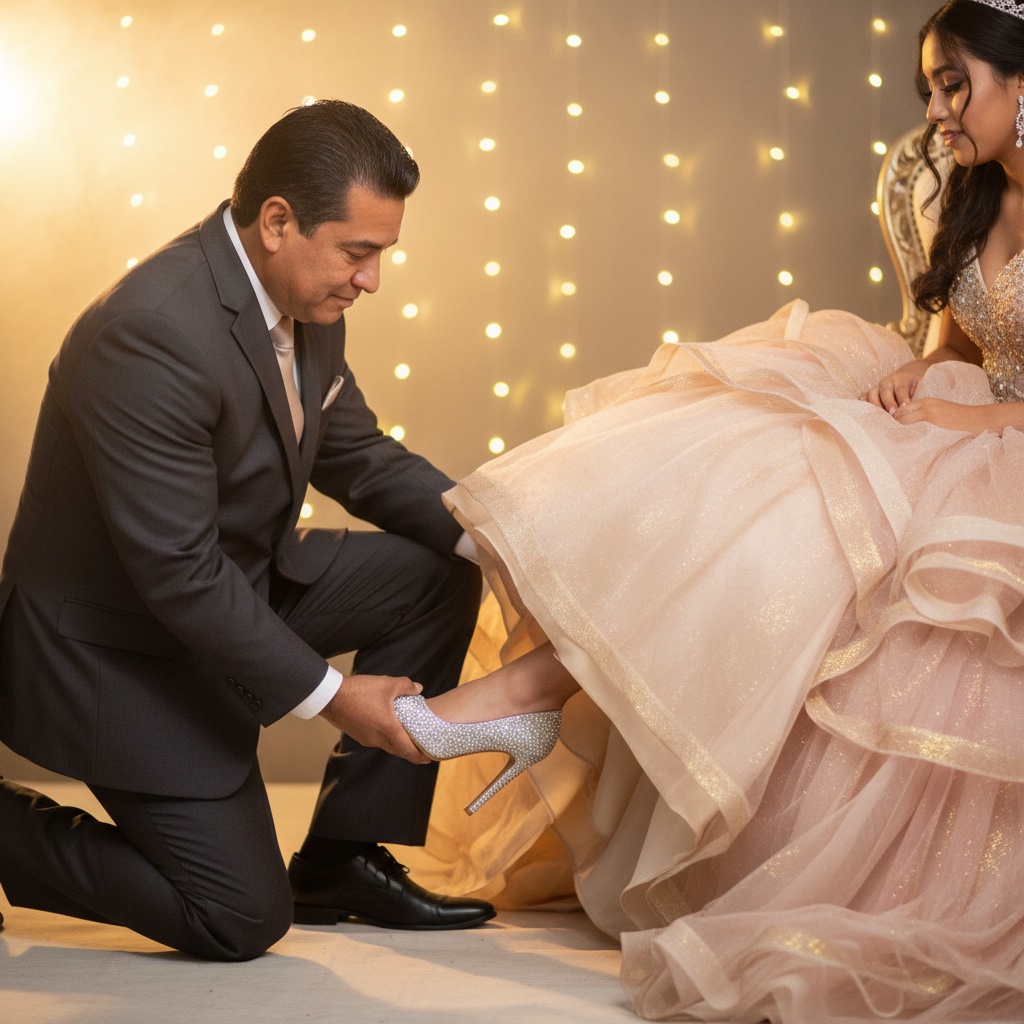
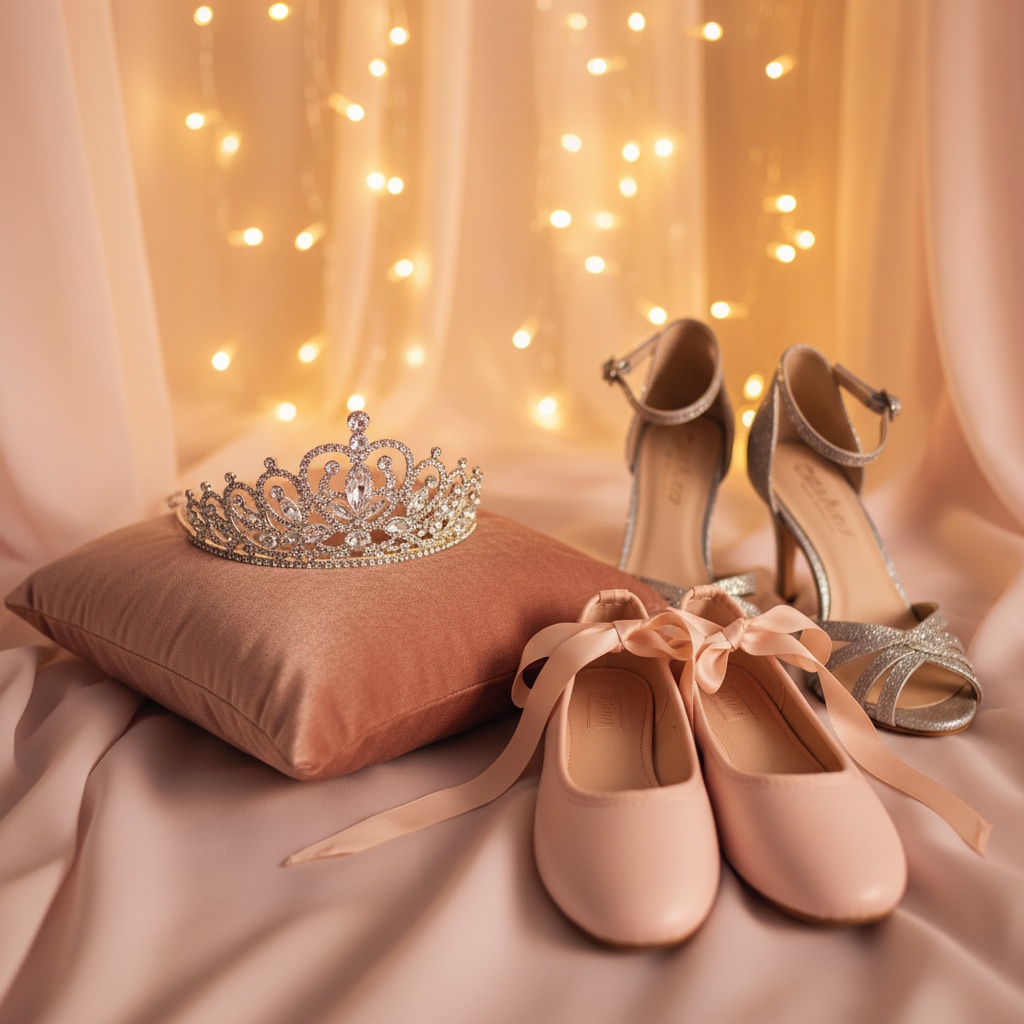
- The quinceañera's father (or stepfather, brother, or another important male figure) removes her flat shoes and replaces them with her first pair of high heels. Symbolizes her transition from a child into a young woman.
- Última muñecaThe last doll/OOL-tee-mah moo-NYEH-kah/
- The quinceañera is presented with a doll, often dressed identically to her, as a symbol of the last toy of her childhood. In many families, she then passes it to a younger sister, cousin, or niece, signaling that childhood is being handed forward.
- Ceremonia de las 15 velasThe 15 candles ceremony/seh-reh-MOH-nee-ah deh lahs KEEN-seh VEH-lahs/
- The quinceañera lights 15 candles, dedicating each one to a person who has shaped her life: parents, abuelos, padrinos, siblings, best friends, mentors. As each candle is lit, she shares a memory or thanks the person publicly.
- BrindisThe toast/BREEN-dees/
- Formal toasts offered by the father, godparents, and sometimes the quinceañera herself. A glass is raised, words are spoken, and the room toasts to her future.
- Las mañanitasThe traditional birthday song/lahs mah-nyah-NEE-tahs/
- The classic Mexican birthday serenade. Often performed by a mariachi early in the day (sometimes before sunrise at home) or as the quinceañera enters the reception.
- Recuerdos / RecuerditosFavors / keepsakes/reh-KWEHR-dohs/
- Small gifts given to guests to remember the day, often a small figurine, candle, framed photo, or personalized keepsake. The padrinos del recuerdo typically sponsor these.
- Hora locaThe "crazy hour"/OH-rah LOH-kah/
- A burst of high-energy fun late in the night: masks, glow sticks, props, confetti, conga lines, surprise dancers, sometimes even fire-eaters or stilt walkers. Originated in Caribbean traditions (especially Cuban and Dominican) and is now common in many Latin American celebrations.
- Bailes sorpresaSurprise dance(s)/BYE-les sor-PREH-sah/
- Choreographed surprise dances, sometimes by the quinceañera and her court switching from waltz to a modern routine mid-song, sometimes a family flash mob. A favorite TikTok-era addition.
- Romper la piñataBreaking the piñata/rom-PEHR lah pee-NYAH-tah/
- Less common at modern quinceañeras but still present in some families as a final gesture acknowledging this is the last time childhood traditions like the piñata are celebrated as her own.
Buen saber: Often danced to a classical piece or a modern song the quinceañera chose. The full vals can run 5–10 minutes including multiple songs.
Buen saber: Almost always one of the most emotional moments, and the photo of her father slipping on the heel is one most families frame.
Buen saber: Sometimes called "ceremonia de las velas" or just "the candle ceremony." Plan for tissues, because this is where everyone cries.
The Symbolic Objects
Los símbolos
Every item placed on the quinceañera carries meaning, and often a padrino to sponsor it.
- VestidoThe dress/beh-STEE-doh/
- The signature ball gown, traditionally pink, white, or champagne, though modern quinceañeras choose every color from deep red to royal blue. Sponsored by los padrinos del vestido and often the single largest line item in the budget.
- Tiara / CoronaTiara / crown/tee-AH-rah / koh-ROH-nah/
- Placed on her head during the ceremony, symbolizing that she is a "princess" for the day and a reminder that she is royalty in her family. Often a family heirloom passed between sisters and cousins.
- Anillo de quinceañeraQuinceañera ring/ah-NEE-yoh deh keen-seh-ah-NYEH-rah/
- A special ring presented to her during the ceremony, often a family heirloom or one purchased for the occasion. Symbolizes commitment and new responsibility.
- AretesEarrings/ah-REH-tehs/
- New earrings traditionally given to the quinceañera, symbolizing that she should listen carefully as she enters this new chapter of life.
- Ramo / RamilleteBouquet / corsage/RAH-moh / rah-mee-YEH-teh/
- The quinceañera carries a bouquet during the ceremony and often presents it to the Virgin Mary. The damas may carry smaller versions; the chambelanes wear matching boutonnières (ramilletes).
- Centros de mesaCenterpieces/SEHN-trohs deh MEH-sah/
- Elaborate table centerpieces matching the theme of the celebration. Often gifted to guests at the end of the night, sponsored by padrinos.
- PastelThe cake/pah-STEHL/
- The multi-tiered cake, often as tall as the quinceañera herself, sometimes featuring 15 small figurines representing her damas, or 15 candles. Cut after the formal dinner.
Preguntas frecuentes
Questions families ask us
What is a chambelán at a quinceañera?
A chambelán is a young man in the court of honor, usually a brother, cousin, or close friend, who escorts the quinceañera throughout the celebration and dances the choreographed vals with her. Most quinceañeras have between 7 and 14 chambelanes, often matching the number of damas. The chambelán de honor is her primary escort.
What does the cambio de zapatilla mean?
The cambio de zapatilla ("changing of the shoes") is the moment her father (or another important male family member) removes her flat shoes and replaces them with her first pair of heels. It symbolizes her transition from a child into a young woman and is one of the most emotional photos of the day.
How many damas and chambelanes should a quinceañera have?
Tradition says 14 damas and 14 chambelanes, representing the 14 years already lived, with the quinceañera herself making the 15. Modern celebrations often scale down to 6, 7, or even just a chambelán de honor, depending on family size and budget. There's no strict rule.
What is the última muñeca tradition?
The "last doll" is a doll, often dressed identically to the quinceañera, presented to her as a symbol of the final toy of childhood. In many families she then passes it on to a younger sister or cousin, formally handing childhood forward.
What is the ceremonia de las 15 velas?
The 15-candle ceremony. The quinceañera lights 15 candles, dedicating each one to a person who shaped her life (parents, abuelos, padrinos, siblings, best friends, mentors) and sharing a memory or thanks as each one is lit. Tissues recommended.
What are padrinos and madrinas at a quinceañera?
Sponsors. Family members or close friends who sponsor specific elements of the celebration: the dress, the cake, the tiara, the ring, the rosary, the bouquet, the favors. Each has a designated role and is publicly recognized during the day. The most senior sponsors, often the quinceañera's actual baptismal godparents, are called padrinos de honor.
What is the hora loca?
The "crazy hour", a high-energy burst late in the night featuring masks, glow sticks, confetti, props, and sometimes performers like dancers, stilt walkers, or fire artists. Originated in Caribbean traditions and is now common across Latin America.
Why does the quinceañera give a bouquet to the Virgin?
The ramo a la Virgen is an act of devotion, usually to La Virgen de Guadalupe or another beloved image of Mary, offered during or after the Mass as gratitude and a request for guidance in her new chapter. One of the most photographed moments of the religious ceremony.
More for planners
 Sponsored · OurEventAlbum
Your photo album
Don’t lose the moments your fotógrafo can’t reach.
One QR code on every mesa. Tíos, abuelos, damas & chambelanes all upload to one shared album. No app, no signup.
- ✓ Unlimited photos & videos
- ✓ Bilingual welcome page
- ✓ Set up in 5 minutes
What matters for event photo sharing with qr code
Searches like event photo sharing with qr code, party photo app, and qr code photo album are usually about reducing friction at a live event. People are willing to add photos when the upload flow is obvious, fast, and does not pull them away from the party.
A useful event photo sharing with qr code turns attendee photos into a collection you can actually use, instead of leaving them scattered across phones.
How to get more attendee photos
- Use a visible QR code for quinceañera terms on signage, slides, table cards, or badges depending on the event.
- Give guests permission to upload candid moments, not just polished portraits. Those are often the photos the host is missing.
- Avoid tools that require downloads when you need quinceañera glossary; app installs kill participation in mixed-age groups.
- Plan where the gallery will be used afterward, such as thank-you emails, social posts, internal recaps, or a family keepsake.
